Approach & services
Different ways in, for people who find one way isn’t enough.
Emerging adolescents often find it almost impossible to identify how they feel, let alone talk about it. I use whichever combination of these approaches eases that initial anxiety and helps you make sense of your own experience.
Psychotherapy
Emerging adulthood (roughly 18–29) is a period of transition — identity forming amid changing relationships with peers and parents, at home or at work, alongside fast-moving biological and hormonal change. It can all feel confusing.
Talking therapy helps you deal with emotionally difficult issues and learn ways of resolving them; adjust to a change of environment; work through developmental milestones; understand the reasons behind how you feel; and improve relationships with friends or family. Sessions run 25, 50 or 100 minutes, in person at the Tealstone Therapy Room in Nantwich or online.
Psychotherapy with sandtray
Sandtray is a tool for exploration and expression: creating a ‘world’ or scene in sand using miniatures and figures, guided by imagination and often reflecting the unconscious or inner world. Together we explore the relationship between what’s built in the sand and your own inner world, through symbolism and metaphor.
It’s a natural area of relaxation, and particularly effective for clients who are highly anxious or find verbal expression difficult. You can re-enact an event or represent a dream symbolically, making sense of what happened and finding the choices or power you have to change a situation — often talking more freely once the pressure to talk is removed.


Shinrin-Yoku, or ‘forest bathing’
Being outside in the fresh air, working with the metaphor of the natural environment, builds life skills, confidence and mental resilience. We move through a plan to establish what the issues are and identify areas of strength and improvement, walking rather than sitting still.
Sessions take place in beautiful, peaceful spaces including Bickerton Hills, Peckforton Hills and a private wood near Cholmondeley Castle — away from screens, at a walking pace, with room to think.
Animal-assisted psychotherapy
Working alongside animals — including Aurora, a therapy dog, and horses — gives clients something steady and undemanding to focus on. One 11-year-old described learning about Aurora’s routine and finding parallels in his own life: it helped him focus more clearly at school, become more assertive, and make friends.
Group sessions have brought together young people managing anger, low self-esteem and friendship difficulties to calmly and respectfully work together — brushing the animals, sharing equipment, and building an obstacle course — learning responsibility, self-reliance, and when to ask for help.
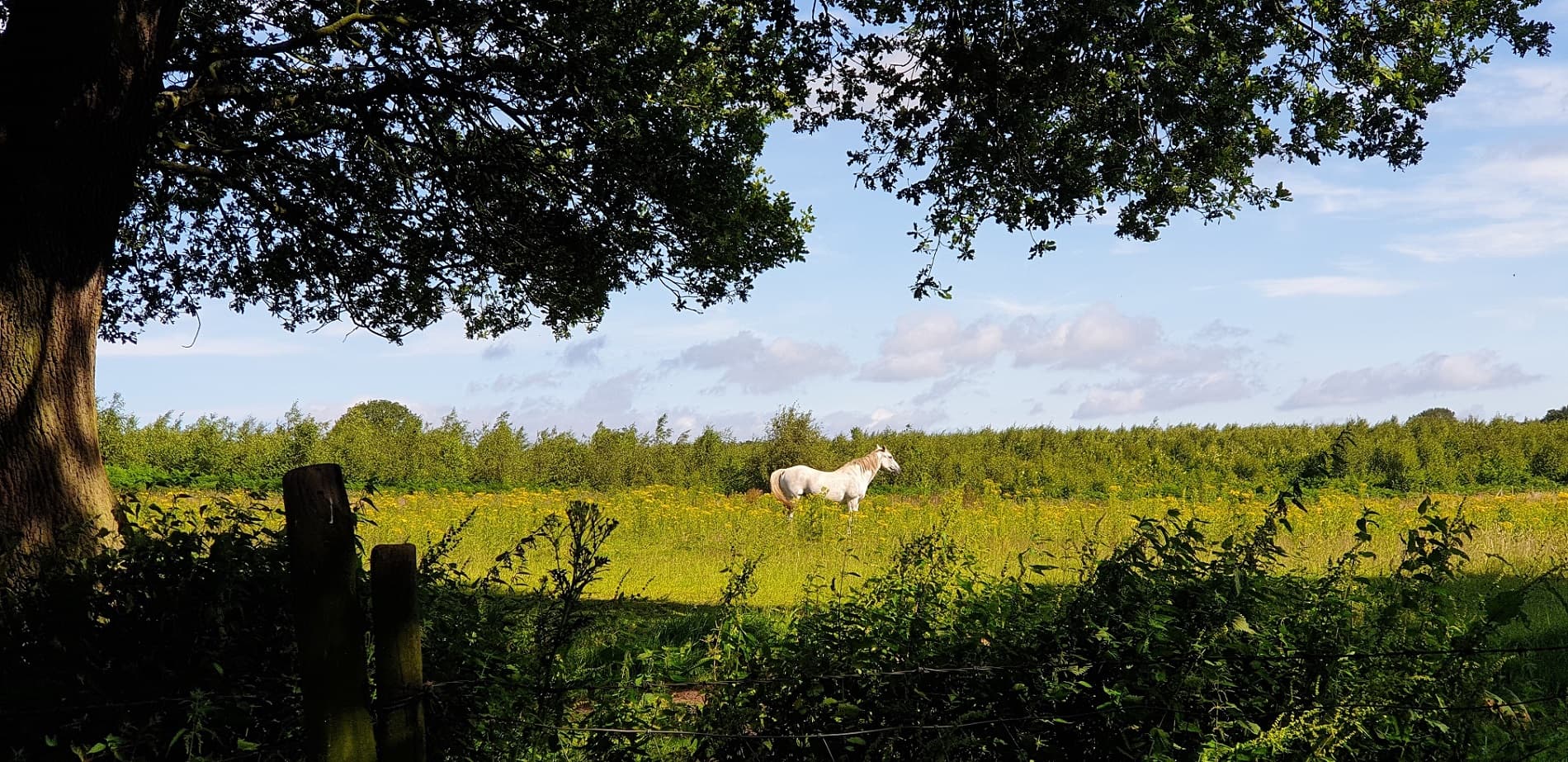
“Liz’s love of horses was an integral part of their bonding, as my daughter has that same bond with horses. We’ve found horses provide such a calming and therapeutic relationship with people.”
Issues worked with
- Anger
- Anxiety
- Boundaries
- Decision making
- Depression or low mood
- Friendship & relationship difficulties
- Effective communication
- Stress
- Grief & loss
- Low self-esteem & confidence
- Motivation
- Resilience
- Trust
- Transitions